
Guest Professor Ulrike Rohn at Business School Pforzheim
News
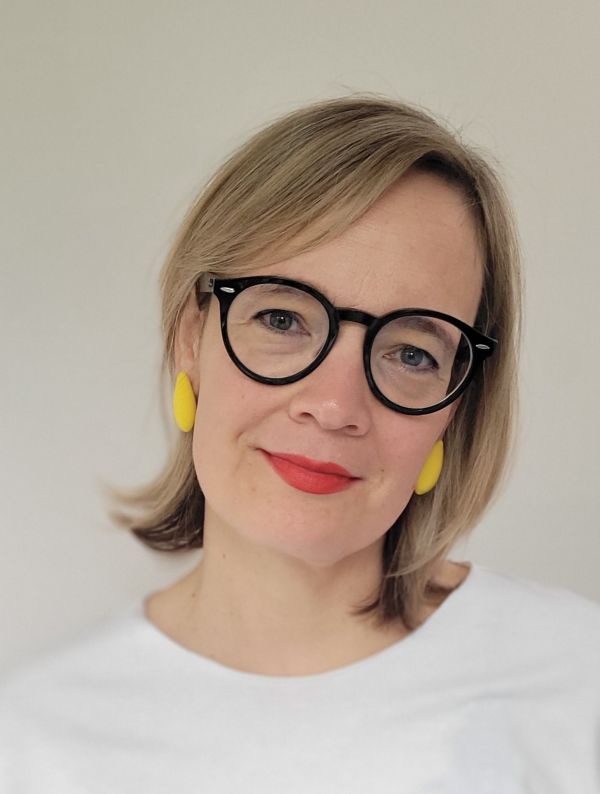
“Small steps matter. Showing up matters. And failure? It’s just a lesson that guides you Forward.” – Ulrike Rohn, Professor of Media Management and Economics at Tallinn University, Estonia
Prof. Ulrike Rohn is a Professor of Media Management and Economics at Tallinn University and its Baltic Film, Media and Arts School in Estonia where she leads the BFM Entrepreneurship Hub. In her research, she focuses on managerial decision-making, the audiovisual industry, media markets, Web3, and media entrepreneurship. At Tallinn University, she teaches courses such as Introduction to Media Management and Economics,Key Concepts in Media Management, as well as Entrepreneurial Mindset for Master’s and doctoral students. In addition to her academic work, Prof. Rohn hosts the ScreenMe Podcast, exploring entrepreneurship, industry trends, and innovation in the media sector, bringing a global perspective to both her teaching and research.
Prof. Rohn, thank you very much for taking the time for this interview. As an international guest professor being on our campus for the first time, how did you find the organization, support, and overall welcome here at Pforzheim University?
One of my first impressions was how incredibly well-organized everything was from the moment it was agreed upon that I would come to teach in Pforzheim. I received all the onboarding information immediately, and I was put in contact with the ISP team. The entire onboarding process for international guest professors seems very standardized, well thought-through, and highly professional. When I arrived on campus, I was welcomed very warmly by Jochen Ebert from ISP. He explained everything clearly, and I felt very taken care of. I was also impressed by how many international guest professors you host. I had an office assigned to me, where I met other international lecturers who were here at the same time. That sparked some very interesting conversations, and we are already planning collaborations. Pforzheim became a kind of meeting point for us, which I really appreciated. The campus itself also left a very good impression—many students hanging out in the Mensa, in the cafeteria, there was a lively atmosphere. Overall, I had a very positive first impression.
Did you notice any differences between your students at home and the students here in Pforzheim?
In Pforzheim, I taught at the BA level. In Tallinn, I usually teach MA and PhD students. Many of my students in Tallinn are older and also work part-time or full-time alongside their studies, especially in the creative industries—media, film, marketing—so they come with quite a bit of work experience. What surprised me positively here in Pforzheim was that many BA students also had substantial practical experience, often through internships. Some even had their own companies already. For a bachelor’s level, I found that very impressive. It really enriched the teaching process.
You taught a course about “Entrepreneurial Mindset” here in Pforzheim. Could you briefly describe the course and why the topic is important?
Of course. I don’t focus on how to set up a start-up in a technical sense. My focus is on entrepreneurial thinking and the entrepreneurial way of decision-making—identifying opportunities, recognizing your own resources, understanding your strengths, your networks, and what risks you can afford. This mindset applies to many aspects of life: choosing a thesis topic, planning your career, or making major decisions. It helps students take ownership of their path. The method I teach is based on Saras Sarasvathy’s theory of Effectual Entrepreneurship. I do ask students to develop business ideas and pitch them, but I think what I wish them to take away from the course is the specific way of thinking and approaching. Their own entrepreneurial self. So the main goal is the mindset—not the business idea.
Is that also what fascinates you most about the topic?
Yes, very much. As an academic, I myself need to act entrepreneurially all the time—I need to identify opportunities, collaborate with the right people, and evaluate what resources I have. I also need to know about my affordable loss. For example, when applying for European research grants, I need to calculate my “affordable loss”: how much time I can afford to spend writing a proposal, even if I might not get the grant. This thinking is deeply entrepreneurial and can be transferred to an academic career. That’s why we also teach this mindset to PhD students.
You also host your own podcast. What motivated you to create it, and what kinds of topics and guests do you feature?The podcast is called the ScreenMe Podcast, and it’s a project I truly care about. I wish I had more time for it, but I enjoy every episode I create. The podcast grew out of a Horizon 2020 project called “ScreenMe“ (which stands for Screen Media Entrepreneurship). After the project ended, I wanted to continue exploring entrepreneurship within the creative and screen media sectors and create a platform to share research, insights, and industry trends.
The podcast contains three different target audiences and topics:
Interviews with startup entrepreneurs—often in the creative or screen media industries. Some are alumni from our university.
Trends in the media and creative industries—and what entrepreneurial opportunities arise from them.
Entrepreneurship teaching—especially for students in creative fields, but not only.
I personally find the podcast incredibly enriching—I get to speak with fascinating people, learn from them, and curate topics that I believe matter.
Is there a particular episode that stayed with you?
Yes, a recent episode on health and well-being in the creative sector with Mark Deuze from the Netherlands. He wrote a book about how the passion people have for creative work can also put them at risk—burnout, mental health challenges, high stress. I had a very interesting conversation with him. Another memorable episode was about value-oriented entrepreneurship teaching. Entrepreneurship isn’t only about maximizing profit—it can be about making meaningful contributions to society and making sense of oneself. That aligns strongly with my own teaching philosophy.
You speak to very international guests. Do you see any cultural differences in entrepreneurial thinking?
I think the core essence of entrepreneurial thinking and acting up on it is universal across the world. But the context can differ. Estonia, for example, is extremely entrepreneurial. It has one of the highest numbers of start-ups and unicorns per capita in the world. The digital infrastructure is exceptional, and the e-residency system attracts founders globally. Because Estonia is so small—only 1.3 million people—there is a mindset that “if I don’t do it, nobody else will.” In larger countries, there isn’t the same urgency. Also, Estonian entrepreneurs must think globally from day one; the local market is too small. That’s different from bigger countries like Germany, where scaling internationally doesn’t have to happen immediately.
What advice would you give to students who want to start a business or are about to graduate?
The most important message is: don’t underestimate yourselves or your resources. And I don’t mean financial resources—I mean your network, your skills, your experiences, and your uniqueness. Many students think entrepreneurship isn’t for them because they aren’t “special” enough. But entrepreneurship is not about being extraordinary; it’s about understanding what you bring to the table and being persistent. If you have a dream, keep on working on it step by step. Don’t get impatient. Small steps matter. Showing up matters. Failure is not final—it always teaches you something, often something crucial that leads you onto a new path. Persistence, awareness of your strengths, and willingness to learn—these are the keys.
Before we close, is there anything else you’d like to add?
Just that I really enjoyed teaching in Pforzheim. The atmosphere in the classroom was wonderful. The students were engaged, respectful, and supportive of each other. I would be very happy to come back.
Thank you very much, Prof. Rohn.
Tallinn University, located in Estonia’s capital, is one of the country’s leading institutions of higher education and research. It offers a wide range of programs across the humanities, social sciences, education, arts, and digital media, with a strong emphasis on interdisciplinary learning and innovation. The university is internationally oriented, attracting students and faculty from around the world, and is known for fostering creativity, entrepreneurship, and global collaboration. Its Baltic Film, Media and Arts School (BFM), in particular, is renowned for combining academic excellence with practical industry experience in media, film, and creative entrepreneurship.


