
Global Supply Chain Management: A Foundational Learning Experience
News
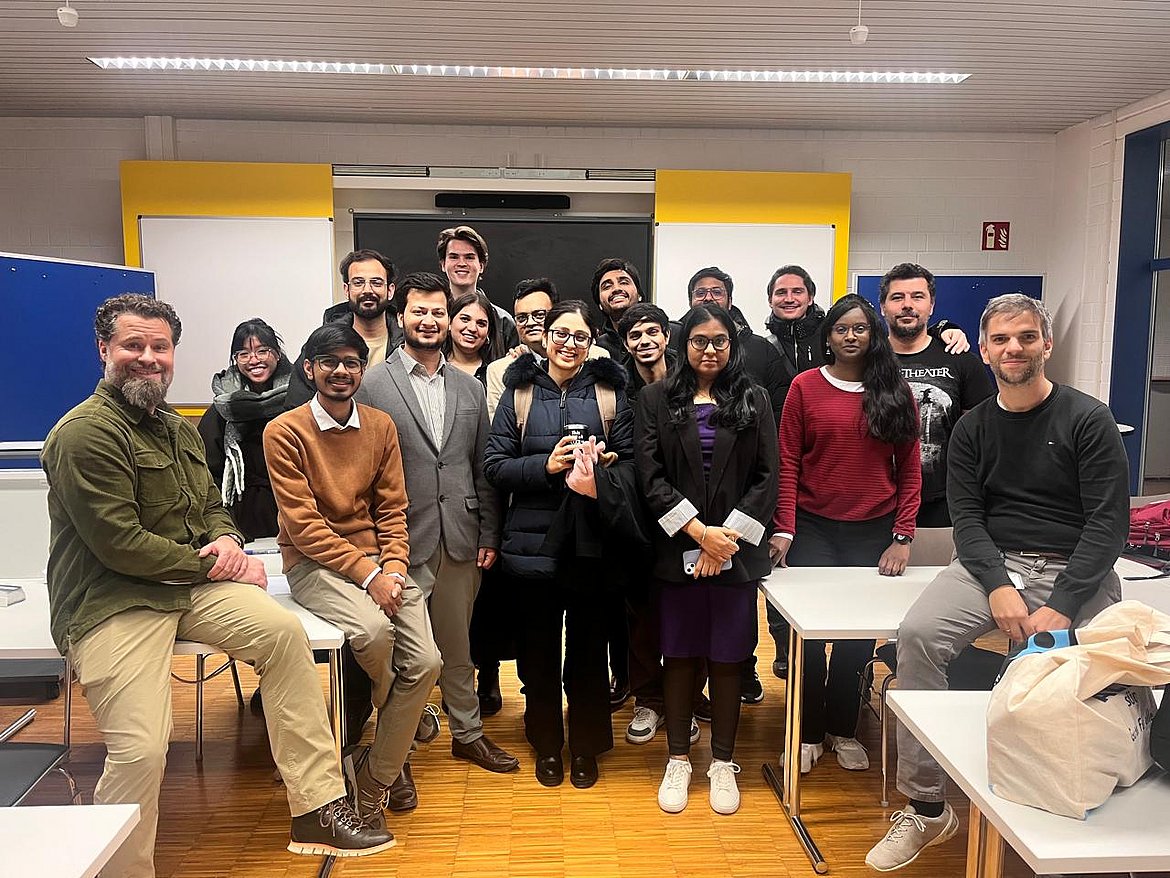
In today’s interconnected world, supply chains form the backbone of global trade, business operations, and everyday life. The Global Supply Chain Management course, taught by Professor Frank Schätter and Professor Hendrik Reefke, provided students with a strong foundational understanding of how supply chains function and why they are critically important in a globalized economy.
Delivered through multiple elaborative sessions, the course introduced students to the basic concepts of supply chain management, including sourcing, production, logistics, inventory, and coordination across organizations and borders. The structured progression of the sessions ensured that students from diverse academic backgrounds could develop a clear and shared understanding of how global supply chains operate. Complex ideas were explained using practical examples, enabling students to connect theory with real-world business practices.
A key focus of the course was the relevance of supply chain management in daily life. Students explored how supply chains influence the availability of essential goods such as food, medicines, clothing, and consumer products. The course highlighted how disruptions in global supply networks directly affect prices, accessibility, and consumer experience, reinforcing why efficient and resilient supply chains matter not only to businesses but also to society as a whole.
The course concluded with an engaging series of group-based learning activities centred on three important themes: circular economy and sustainability in global supply chains, Supply Chain Risk Management, and data-driven and AI-enabled supply chains. These sessions encouraged active participation and peer-to-peer learning. Students used quizzes, skits, and interactive question-and-answer rounds to explain complex topics while involving the entire classroom in the learning process.
These collaborative exercises strengthened students’ understanding of contemporary supply chain challenges while developing essential skills such as teamwork, communication, creativity, and critical thinking. The interactive format made learning both effective and enjoyable, transforming theoretical concepts into practical insights.
The Global Supply Chain Management course successfully combined academic foundations with real-world relevance. Under the guidance of Professors Schätter and Reefke, students gained valuable insights into how global supply chains shape modern economies and everyday life, equipping them with essential knowledge for future academic and professional endeavours.
Text and photo: Amit Sharma, Class of 2027


